What role do Human Rights Defenders play in shaping democratic societies, and why must their work be strengthened today?
Human Rights Defenders (HRDs) safeguard public freedoms by holding power accountable, amplifying marginalized voices, and protecting civic space, and their work must be strengthened today to ensure that democratic institutions remain transparent, inclusive, and resilient against rising repression.
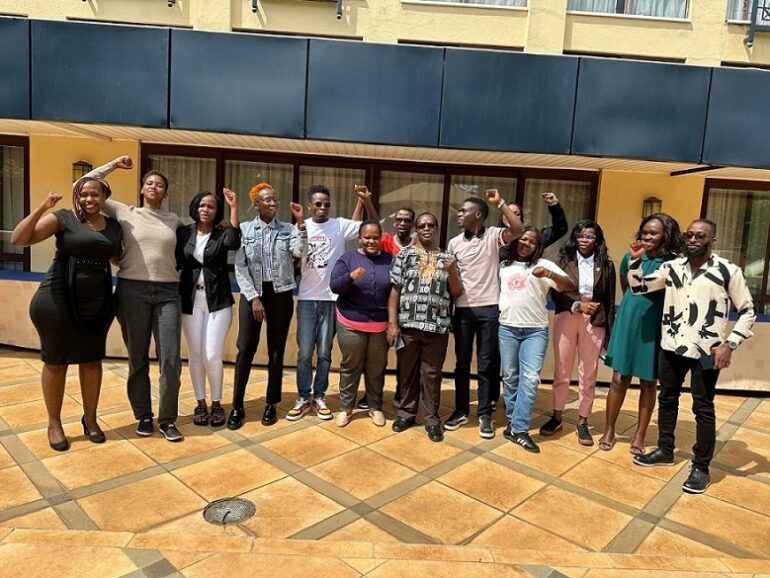
Last week, we were privileged to be part of a 3-day boot camp organized by the East African Editors Society on Public Narrative as Leadership Practice to deepen this capacity recognizing that HRDs not only need protection from external threats, but also need stronger tools to shape public understanding of their work and reinforce the legitimacy of human rights advocacy.
The training also broadened our understanding of HRDs as individuals or groups who promote and protect fundamental freedoms. They may be journalists exposing corruption, community leaders mobilizing for land rights, youth building civic awareness online, or organizations supporting survivors of violence. Their work strengthens institutions, improves transparency, protects vulnerable communities, and ensures the rule of law is more than just policy language. Yet, despite their critical role, HRDs often work in environments that are politically hostile, socially misunderstood, and personally risky.
Discussions focused on the shifting nature of threats facing HRDs. While harassment, arbitrary arrest, surveillance, and legal restrictions remain common, there is an increasing trend of delegitimizing narratives. HRDs are frequently labeled as “foreign agents,” “anti-development,” “immoral,” “disruptive,” or “unpatriotic.” These labels are not accidental; they are strategic. They weaken public support for HRDs, discourage participation in civic action, and isolate individuals who are advocating for public good.
This is where the relevance of public narrative as a leadership practice becomes important. The training emphasized that defending rights is not only about legal frameworks or policy advocacy; it is also about shaping public understanding. If the stories told about HRDs continue to portray them as threats, then communities will be less willing to recognize the value of their work. The ability to frame and communicate purpose to explain clearly why one does this work and why it matters to the community is therefore essential.
Public narrative provides a practical approach for doing this. It teaches leaders to connect personal motivation , shared values, and the urgency of current challenges . During the bootcamp, we practiced articulating our work in ways that build trust, demonstrate shared interest with communities, and counter negative assumptions. Rather than responding defensively to accusations, HRDs learn to proactively position themselves as contributors to community wellbeing and democratic progress.
Another core part of the training involved understanding the broader context in which HRDs operate. Using tools such as political economy analysis, participants examined how power is distributed, who influences decisions, what incentives shape political and social behavior, and where opportunities for change exist. This helped frame human rights work not as isolated activism, but as strategic engagement with systems, institutions, and public discourse.
By the end of the program, it was clear that HRDs play a vital role in shaping fair, accountable, and inclusive societies but their ability to do so depends on being visible, supported, and understood. Strengthening HRDs is not only about protecting individuals; it is about protecting civic space, safeguarding public voice, and sustaining the possibility of democratic progress.