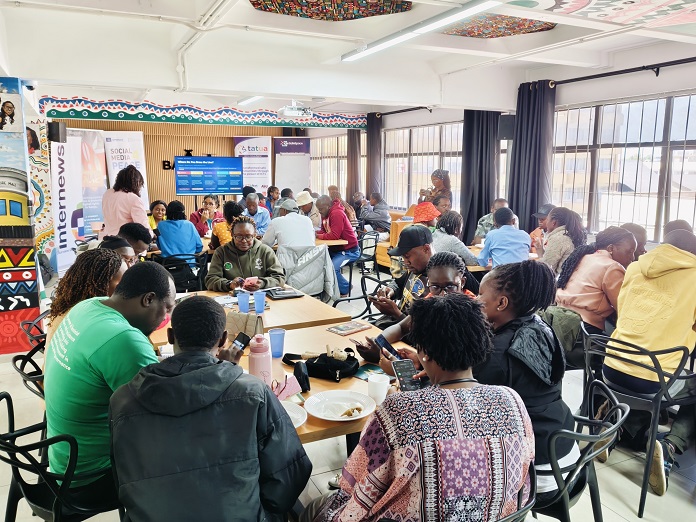
On 1st and 2nd of April, in partnership with KICTANet, UNESCO, and Internews, we hosted a two-day intensive workshop at the Baraza Media Lab Nakuru for journalists, content creators, Civil Society Organizations (CSOs), and Human Rights Defenders (HRDs) for a workshop on advancing Digital Rights and Governance in the Age of AI and Elections. The training addressed the emerging complexities of an ecosystem where technology often evolves faster than the frameworks meant to govern it.
The workshop opened by tackling the shifting frontier of content moderation and the rise of AI-driven harms. Participants explored how current moderation systems frequently overlook local nuances, allowing harmful speech to spread unchecked. and the state of State of Digital Rights in Kenya and the Region, providing a critical look at regional trends in cyber threats, civic space, and the growing landscape of Technology-Facilitated Gender-Based Violence (TFGBV) in East Africa.
Participants also unpacked the Impact of the Data Protection Act and explored how organizations can leverage emerging opportunities while maintaining legal compliance. This analytical foundation was paired with a deep dive into fact-checking, where the cohort examined the mechanics of Fact-Checking and the surge of Mis/Disinformation driven by AI. A significant portion of the fact-checking session was dedicated to the practical application of verification tools designed to unmask digital deception, identify manipulated or out-of-context visuals, and verifying video authenticity. We also explored regional resources like Africa Check and global databases like Snopes to cross-reference viral claims.
This specialized training proved essential, particularly as Nakuru continues to be identified as a key target location for coordinated election misinformation and polarizing narratives. Ordinarily, hate speech and polarizing content frequently bypass global moderation systems that usually overlook local nuances and slang. By mastering these specific tools, participants were empowered to proactively identify and counter digital threats before they could escalate into real-world harm.
The trainees engaged in a detailed analysis of the alarming surge in sophisticated digital threats, specifically focusing on the rise of deepfakes and Technology-Facilitated Gender-Based Violence (TFGBV). Within the Kenyan political and social landscape, these tools are increasingly used to target women in leadership and human rights defenders, moving beyond simple online harassment into coordinated character assassination.
By learning to identify the subtle markers of AI-generated fakes such as unnatural eye movements, inconsistent lighting, or distorted audio participants moved from being passive targets to active investigators.
Day two shifted gears into a hands-on Technical Lab and Cyber Hygiene session, moving from policy awareness to practical defense. Recognizing that digital safety is the foundation of effective advocacy, the curriculum focused on equipping participants with the skills to identify, analyze, and document complex online threats. We explored the evolving trends of social media platform governance and the impact of algorithmic moderation on freedom of expression, ensuring that attendees could track and respond to threats to election integrity.
A major highlight of the training was the technical lab which explored mastery of verification workflows and digital evidence documentation. Participants moved beyond simple observation to learn how to debunk misinformation in real-time using advanced digital tools. Crucially, the session provided a deep dive into the technical methods required to archive online abuse, teaching participants how to preserve screenshots and metadata effectively. By ensuring this data is captured correctly, creators and HRDs can provide evidence that remains viable for both legal proceedings and long-term advocacy purposes, protecting authentic narratives from being dismissed.
Commenting on the training, Onesmus Mosoti, one of the trainees noted that, the session on fact-checking in particular was truly enlightening. With the coming electioneering period in Kenya, these tools are no longer just optional skills they are essential defenses for anyone publishing or sharing information online. As a HRD and content creator, I now feel fully equipped to identify these threats and protect the communities I serve from digital manipulation.”
The workshop concluded with the development of localized advocacy strategies and crisis communication plans designed to safeguard democratic processes ahead of the upcoming electioneering period.