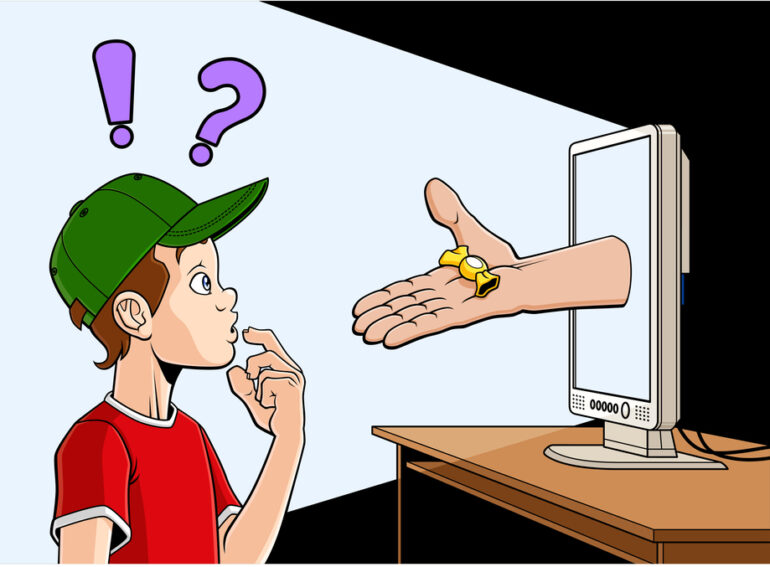
For years, we’ve treated child online safety like a digital curfew. Parents were given the responsibility to get control apps, to track location, filters to block sites, and timers to lock screens. But as we near 2026, there is a growing realization that these tools are essentially burdensome to band-aids on a leaky pipe. Why should the burden of safety fall entirely on parents and children when the digital “neighborhoods” they live in are often built to be dangerous? This has sparked a global movement toward Safety-by-Design, the idea that platforms should be safe from the moment you hit “Sign Up” without a parent needing to flip a single switch.
The focus has shifted from fixing harms to preventing them through better architecture. In the past, algorithms were designed for one thing: engagement. They were built to keep you scrolling, even if that meant pushing a teenager toward extreme dieting content or political disinformation. Safety-by-Design flips this script. It requires tech companies to conduct rigorous risk assessments before they even launch a new feature. If a feature like an “infinite scroll” or an “autoplay” video is proven to be psychologically addictive or harmful to minors, it simply shouldn’t be built that way. This represents a fundamental shift in Digital Rights, asserting that children have a right to a digital environment that respects their development rather than one that exploits it for profit.
The most powerful change in this new era is the “Default Setting.” That means if a user is under 18, their account is automatically set to the highest privacy levels. This means profiles are not searchable by strangers and geolocation is turned off unless manually enabled for a specific reason. Instead of just blocking content, platforms are now using “nudges” to create friction. For example, if a teen is about to share their home address or a sensitive photo, the app pauses to ask if they are sure they want the public to see it. This teaches digital literacy in real-time. Furthermore, major laws like the EU’s Digital Services Act (DSA) now force companies to prove their recommendation engines aren’t radicalizing youth, creating a baseline of safety that exists regardless of how tech-savvy a parent might be.
However, “building in” safety comes with significant risks. For example, to know who is a minor, platforms are turning to Age Verification, which often involves scanning government IDs or using facial-analysis AI. However, we risk creating a massive database of biometric data, which is a nightmare for privacy rights.
There is also the “Gated Community” problem; if we make the mainstream internet too restrictive, young people may simply migrate to unmoderated, “underground” platforms where there are zero protections.
Finally, there is the danger of sanitizing creativity. There is a fine line between “safe” and “censored,” and aggressive algorithms may inadvertently design out the weird, creative, and challenging content that helps young people grow.
The transition to Safety-by-Design is ultimately about a new social contract between tech giants and society. We are moving away from the “Move Fast and Break Things” era toward an era of Product Responsibility. The same way we don’t buy cars without seatbelts and expect parents to install them, we shouldn’t join social networks that aren’t safe at the point of entry.
Hopefully, the next decade won’t just be about who can build the coolest AI, but about who can build the most ethical one. True inclusivity means creating a web where the most vulnerable users can explore, learn, and connect without being treated as data points for an engagement machine.